When my ten year-old was a toddler, he would eat anything. From Thai food to cooked fish sushi, like many kids he was game for any flavor experience out there. He was especially fond of salmon: I remember buying it at the grocery store back then: one pound for my husband and me, and half a pound for my two year-old.
As he grew up, his desire to experience varied foods was trumped by his desire to control his food intake, and again, like many kids, his preferences narrowed; eventually, we could accurately apply the “picky eater” label to him. His love for salmon fell by the wayside with many other foods, and I forced myself not to freak out, instead deciding to be patient and wait this phase out.
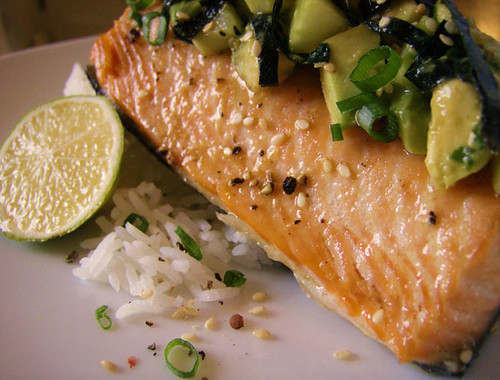
Well, that phase lasted about 6 years, but eventually, his love of salmon was rekindled after I actually paid him a dollar to take a bite. He loves it again—as do my other two children–and now, with a family of five to feed, we can go through a lot of salmon in one meal. He still hasn’t gotten back in touch with his “sushi period,” so I decided to develop a recipe that might lure him back to the exciting tastes and textures of Japanese food. It’s one thing to label my son’s food choices as “picky.” It’s another thing entirely to let that label affect how I choose to feed him. And my choice is, and always has been, to encourage adventurous eating in a no-pressure way. Since I believe a varied diet begets a more balanced diet, it’s worth the effort—and high risk of rejection—to keep trying.
Don’t get me wrong: I’m not a believer in pressuring younger kids to be too adventurous with new tastes; rather, I believe that respecting their self-imposed boundaries—while providing plenty of the most nutritious options they’re willing to eat—should be the general rule. But studies have shown again and again that the more kids are exposed to new food options, the more willing they’ll be to adopt them over time. However, studies are one thing: experience is something else altogether. That being said, I’m finding over time that the research bears out. My kids are broadening their horizons all by themselves; and I believe that because they make the change themselves—and on their own terms—the change is definitely more meaningful and hopefully long-lasting.
I’m a big fan of salmon for several reasons:
- Salmon is a forgiving fish. Because of its high oil content and firm texture, salmon is an excellent choice for any cook: the same property responsible for its rich flavor—which works on its own or paired with just about anything you choose—also allows more latitude with its preparation. Unless hopelessly overdone, salmon retains a moist texture that can compensate for a distracted dinner preparation or a long hold time.
- Salmon is jam-packed with health benefits for people of all ages. High in Omega-3s, salmon is an excellent source of the essential fatty acids (EFAs), fats that all humans need to ingest from foods to be healthy, since our bodies can’t make them themselves. The benefits of EFAs include protection from cardiovascular disease and diabetes, improved mood regulation and learning ability, and enhanced immunity from community-acquired illness as well as chronic illness. And let’s not forget that healthy hair, skin, and nails are an extra benefit we can all appreciate.
- Salmon is a fish with one of the highest protein contents per ounce, making it a budget friendly choice when eaten even in the relatively small amounts the USDA recommends as a serving size: 3 ounces. Most people choose to eat a larger portion than that, but the fact remains that salmon is very nutrient dense, meaning you the consumer get one of the biggest nutritional bangs for your buck when you compare the nutritional benefit per calorie you consume.
My recipe for Roasted Salmon with Sushi-Style Salsa is quick and easy, and the low-calorie but flavorful cucumber and avocado topping plays up the health benefits of the fish. The wasabi, soy, sesame, nori, and rice wine give this salsa its unmistakable sushi vibe, and—served with some steamed rice and vegetables—Japanese food lovers will not be disappointed. I’m anxious to try this recipe on my son, partly because I enjoy the challenge of convincing him I know what tastes good, and partly because I’m selfishly anxious to add sushi restaurants back into my family’s dinner-out repertoire.
Roasted Salmon with Veggie Sushi Salsa
Salmon doneness is strictly a matter of preference. The good thing about oily fish like salmon and tuna is that, unlike meats, peeking inside to see how done it is won’t really affect the final outcome. Fish won’t lose any appreciable moisture through the cut you make.
Serving Suggestion: Pair with steamed rice, a fresh green salad, or steamed vegetables.
Servings: 4 (195 g )
Prep Time: 10 min.
Cook Time: 30 min.
Ingredients
- 1 lb. salmon filet
- 2 Tbsp. lemon juice
- ½ tsp. salt
- Pepper to taste
Veggie Sushi Salsa:
- ½ tsp. sesame oil
- 2 tsp. soy sauce
- 2 tsp. rice wine vinegar
- 1 tsp. wasabi paste
- 1 cup cucumber, peeled and diced
- ⅔ cup avocado, diced
- ¼ cup sliced scallions
- ½ sheet nori, cut in slivers
- 2 tsp. sesame seeds, toasted
Directions
- Preheat oven to 400ºF. Cut the salmon into four equal pieces and place them on a foil-lined and lightly oiled sheet pan. Sprinkle fish with lemon juice, salt, and pepper. Bake to desired doneness (15-18 minutes).
- While salmon is cooking, whisk together the sesame oil, soy sauce, rice wine vinegar, and wasabi paste. Add the cucumber, avocado, scallions, and nori and toss to coat. Set aside.
- Top fish with salsa and sprinkle with sesame seeds.
About the Expert Chef
Erin Dow balances three food worlds. As a mother of three young children, she’s fighting the battle every parent faces: how to keep her kids interested in the foods that keep them healthy.
As the chef and owner of her catering company Eatswell Farm, she utilizes original recipes and techniques–focused on enhancing the enjoyment of locally-sourced ingredients–to best interpret the client’s vision. And as Consulting Executive Chef for Falmouth-based Professional Catering Services, a business specializing in production and backstage catering for concerts, she develops and executes menus that accommodate the strict nutritional requirements of the music industry elite.
Erin and her family raise their own chicken for meat and eggs, have dabbled in pastured Narragansett turkeys, and have a very weedy but very large and productive garden.