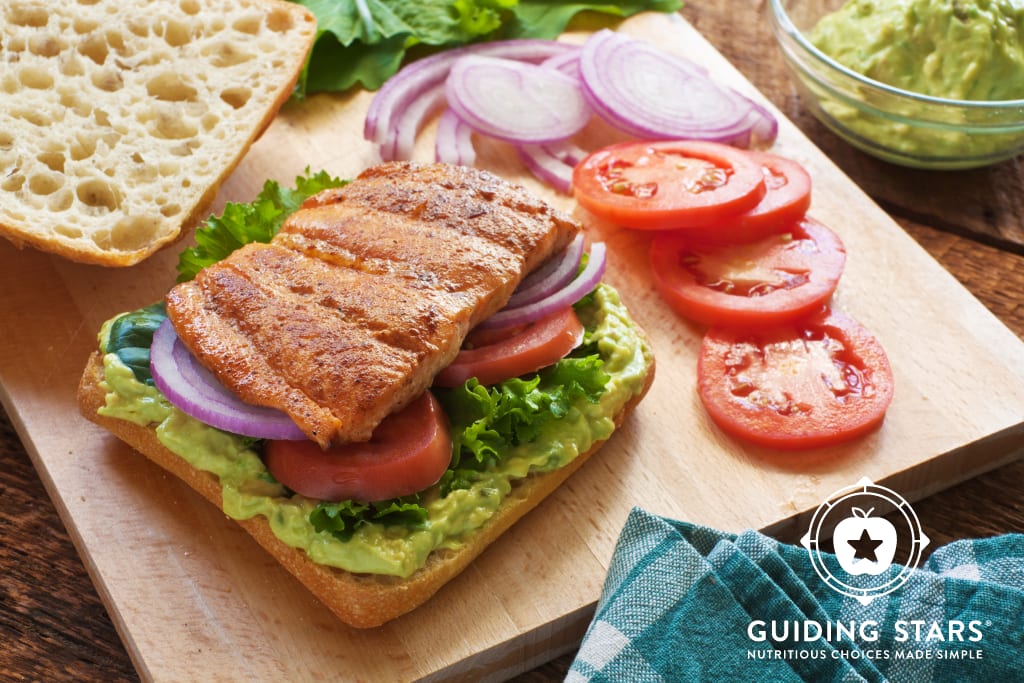
It’s time to stop sleeping on sandwiches—these lunchtime staples have a lot going for them. You have to appreciate the efficiency of packing all the food groups between two slices of bread. And a sandwich is not a lazy or lesser meal. In fact, it’s one of the easiest ways to get yourself a balanced meal in three minutes flat. Here’s how…
The Sandwich Solution for a Healthy Meal
Putting together a sandwich can be a great exercise in thoughtful food preparation. For one, you’re prompted to think about the components as you’re layering them. And this puts you in a good position to make intentional ingredient choices. Here’s what each main component provides:
- Bread or wrap: carbohydrates, whole grains, fiber, vitamins, and minerals
- Spread: fat and some vitamins (could also provide some fiber depending on what you use)
- Animal or plant-based filling: protein, vitamins, and minerals (and maybe some fiber depending on plants used)
- Vegetables: fiber and a slew of vitamins, minerals, and other phytonutrients
Build a Healthy, Balanced Sandwich
To assemble a sandwich or wrap, of course you’ll first consider which ingredients you prefer for their taste. Then look at all the options that can take your meal from boring and basic to balanced and brilliant. Level up each layer of your sandwich so that together they make a delicious and balanced meal.
The Bread or Wrap
Here’s a chance to make the major carbohydrate aspect of your sandwich do some heavy lifting. Look for a bread that provides at least 3-4 grams of fiber per slice (6+ grams for a wrap). Look for options that list whole grain flours as the first ingredient, and don’t forget that tortillas made with legumes or flax can make good wraps too (although they may not be as pliable as wheat-based versions). Nuts and seeds in a bread or wrap may also slightly increase its fiber as well as protein. Short on time to read all the labels in the bread aisle? Let Guiding Stars show you the way to a delicious, higher-fiber, Star-earning bread or wrap.
The Spread
There are so many things you can spread on bread for flavor and added moisture. Many of them are a source of fat—not necessarily a bad thing! Healthy fats are an important part of a balanced diet. Mayonnaise is a classic and yes, there are plenty of mayo options that earn three Guiding Stars for their use of healthy fats as the first ingredient (think avocado, safflower, canola, or soy oil) and limited additives to limit. Outside of mayonnaise-type spreads, consider these options that feature healthy fats:
- Mashed avocado or guacamole (consider making our Yogurt Guacamole)
- Hummus
- Pesto
- Tzatziki
- Greek yogurt mixed with fresh herbs and a squeeze of lemon juice
- Blended cottage cheese mixed with herbs and spices
- Your favorite hot sauce mixed with silken tofu or Greek yogurt
- Nut or seed butter
Condiments that don’t contribute healthy fats are not off-limits. However, they often lack redeeming nutritional qualities and contain substantial amounts of added sodium, sugars, and other ingredients you may want to avoid. This is why ketchup and mustard don’t earn Guiding Stars, for example. You can check whether or not your favorite condiments earn Guiding Stars by using the Food Finder tool.
The Filling
Give your sandwich some staying power with a protein-rich filling. Sliced meat or poultry, eggs, and fish-based fillings are common, and a veggie-based one can also provide adequate protein. Deli meats are typically high in sodium, but some low-sodium brands are available (check at the deli counter). To avoid the extra additives sometimes found in sliced deli meat, consider using meat or poultry you’ve cooked at home (such as roasted chicken or turkey breast). Even leftover proteins like boneless pork tenderloin or baked fish can make a good sandwich filling.
If a plant-based option is preferable, try a bean filling. Mashed chickpeas are a good choice (like in this Buffalo Chickpea Salad Wrap or this Garbanzo Salad filling). Edamame or white beans also work well, as do lentils (such as in this Spicy Lentil Wrap with Tahini Sauce). If you’re interested in soy-based protein options, try seasoned tofu or tempeh. And layering on a bunch of your favorite vegetables can provide a hearty meal, like with this Green Goddess Sandwich. To boost the protein in plant-based sandwiches, select a higher-protein bread or wrap.
The Vegetables
That sad, wilted lettuce leaf and lone tomato slice don’t contribute much in the way of taste or nutrition. It’s time to bump up the flavor, texture, and nutrients by packing your sandwich with plenty of produce. Go for veggie volume by adding a substantial layer—they’ll count for something and balance out the other ingredients! Use whatever vegetables suit your taste. For something different, try shredded slaw vegetable mix (no dressing) or leftover roasted or grilled vegetables. Any (undressed) vegetable salad will work too. Or just load that sandwich up with plenty of colorful and crunchy seasonal fresh vegetables. They’re best when thinly sliced for stacking or cut into matchsticks (nice for wraps). And while you’re at it, don’t forget fresh herbs like basil, parsley, tarragon, dill, and chives. They’ll bump up the flavor as well as add nutrients.