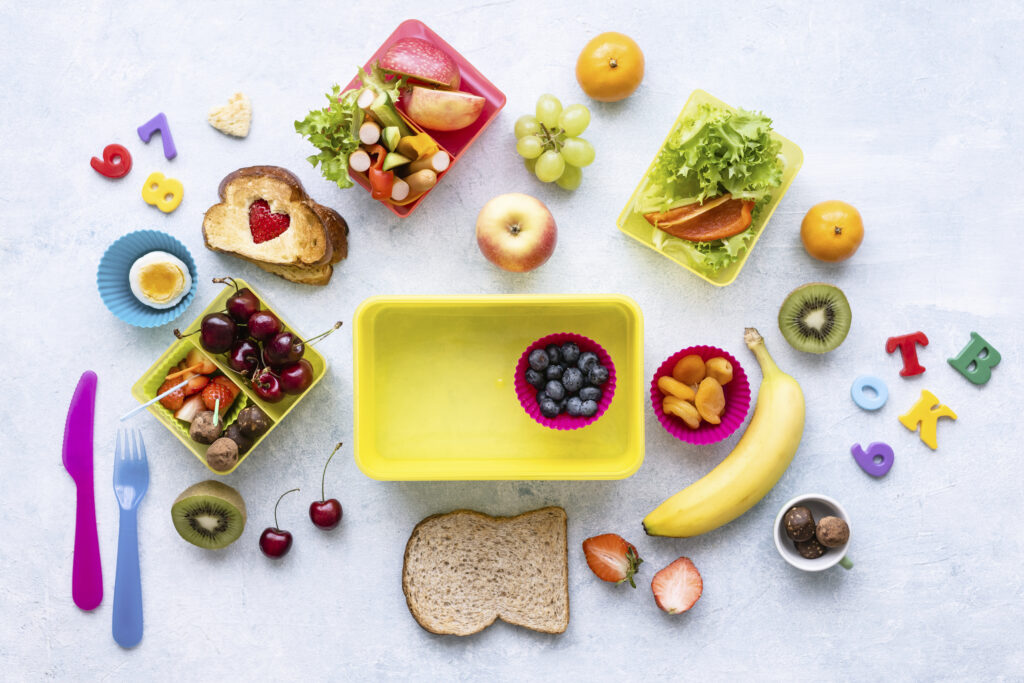
As schools throw open their doors for the new school year, you might be wondering if you should be packing a home lunch or letting your kids get a school lunch. The National School Lunch Program provides lunches (and breakfasts by the way) to nearly 30 million children every school day. However, it’s estimated that roughly 40% of children bring their lunches from home on any given school day. Both options have pros and cons.
For example, school lunch is convenient. But having your child learn to pack a lunch can help teach life skills like meal planning and food preparation. School lunch is also inexpensive (and free in certain states. and for students who meet financial need requirements). But a home lunch can include foods with specific characteristics (such as organic, allergen-free, and vegan). These are just a couple of examples. Let’s take a look at some considerations that may help you decide which lunch option is right for your kids.
Which Is More Nutritious?
A systematic review and meta-analysis of home lunches published in Advances in Nutrition found that lunches brought from home tend to have a lower nutritional quality compared to national school lunch offerings. Nutritionally, lunches from home often lack fiber, iron, protein and vitamin A. (Calcium too, which might be explained by the premise that children will be purchasing milk at school.) Home lunches also tend to be higher in carbohydrates and saturated fat. A lack of vegetables and more snack foods, desserts, and sugar-sweetened beverages are common among home lunches too. Nutrition requirements for school lunches are not arbitrary—they’re based on the Dietary Guidelines for Americans. And for many children, a school lunch is the most nutritious meal they get all day.
The Likability Factor
You can give a child a healthy lunch, but that doesn’t guarantee they will eat it. And that holds true for both home and school lunches. (Anyone remember trading items from your home lunches?) The school lunch program requires a balanced meal containing vegetables, fruit, milk/soy milk, protein, and whole grains. No doubt there are items in the school lunches that don’t hold appeal for all children. However, there is also value in exposing children to foods they haven’t tried before. Children typically need several experiences with an unfamiliar food before they decide to eat it or like it. And it’s especially helpful for children to see their friends eating foods they themselves haven’t tried yet. School lunch offerings also usually have a few options. So chances are good that there will be at least something your child will like.
Dealing with Food Allergies
Having a child with food allergies or intolerances is always a serious concern. Packing a lunch from home can help reassure parents that their child will only be eating safe food items. However, school lunches can also be suitable for children with food allergies. Schools are obligated to make accommodations for children with food allergies that are documented by a healthcare professional. 504 plans are documents that indicate accommodations the school provides for students. For students with allergies and intolerances, a 504 plan might include ensuring access to non-allergenic foods when food is being provided to all students. And having designated “allergen-aware” tables in the cafeteria, where the most common allergens are not allowed.
There are many resources for parents to learn how to prepare their children for handling food allergies at school. Parents can also learn what plans schools and foodservice workers have in place to keep children with food allergies safe.
School Meal Changes on the Horizon
The USDA is still refining school nutrition regulations for the 2026-2027 school lear. Changes to school lunch standards are nothing new. Part of the impetus for these changes is keeping lunches aligned with the U.S. Dietary Guidelines, which are updated every five years. Often, modifications are made in phases. Some changes have already been approved, such as offering whole and 2% milk in addition to the skim milk that has been the standard milk offered for many years.
Although it’s not known exactly what additional changes will be made, they might include:
- Requiring strict limits on added sugars per meal
- Removing minimum grain requirements at breakfast
- Allowing schools more time to implement sodium limits
The Best of Both Worlds
When my children were in public school, we reviewed the school menus together. Then they’d decide which two or three days to eat school lunch and which days to bring lunch from home. This allowed them some autonomy in food selections. It also encouraged them to learn to eat food someone else had prepared. And it gave them opportunities to pack their own lunches (with some supervision), ensuring they’d like their entire lunch. Ultimately, the decision about whether to bring lunch or eat the school lunch is a family decision. And there are no right or wrong answers.