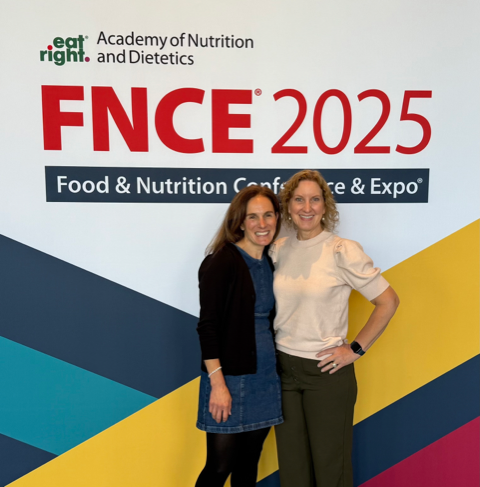
My friend and fellow Guiding Stars blogging colleague, Allison Stowell, and I recently returned from the world’s largest dietitian conference, the annual conference of the Academy of Nutrition and Dietetics. We listened and learned from a variety of presentations and events, and tasted our way through many product exhibits (our favorite part).
There’s a lot to learn from talking to food company representatives. Food manufacturers and trade boards stay current on trends to keep up with (or get ahead of) their competitors. Spending time with the folks working the expo usually reveals what food and nutrition trends are coming next. Here is a taste of the trends we see taking shape for 2026.
Protein and Fiber Team Up
For the past couple of years, protein has dominated new product introductions in the “healthy foods” market. Consumers are certainly still interested in the protein content of their food and overall diet, and food manufacturers and their marketing teams aren’t letting go of protein as a selling point yet, but this year, fiber is finally getting its fair share of the spotlight. For appetite control and weight management in particular, protein and fiber are a great team. They both impact satiety hormones, and hang out longer in the digestive tract, thereby contributing to a sense of fullness. Woven into this trend is a great opportunity for plant-forward brands to highlight the fact that both protein and fiber are naturally present in their products. These include protein bars, snack foods, and vegetarian protein powders (dairy-based powders are generally devoid of fiber).
GLP-1 Medications Impacting Products and Priorities
Appetite-reducing glucagon-like peptide-1 agonist medications (GLP-1s) are already immensely popular for managing diabetes/blood sugar levels and weight. Naturally, these powerful drugs are causing changes in the food and nutrition landscape. For example, according to a report by KPMG, the average GLP-1 user is spending roughly 31% less on food monthly. And consuming an estimated 21% fewer calories annually than before using the medications. That large decrease in food consumption means these consumers are prioritizing smaller portions. As a result, food manufacturers are racing to highlight their portion-controlled offerings with “GLP-1 friendly” label callouts.
Nutrient needs, such as for protein, can be higher in those who are actively losing weight. This gives food companies the added challenge of packing more nutrition into smaller portions. GLP-1 medication users also need to focus on hydration (the sense of thirst can be diminished) and fiber (constipation is a common side effect). To that end, the newer, boosted beverages and functional sodas may fit the bill nicely. And as we’ve all seen, more of them show up on the shelves every day. Look for more single-serve beverage options with added ingredients like adaptogens, probiotics, fiber, and other nutrients. Snack options that capitalize on the win-wins of protein plus fiber are good choices too.
Gut Health Goes Mainstream
Gone are the days when talking about your digestive system’s functioning was reserved for the doctor’s office. Conditions like IBS, lactose intolerance, Crohn’s disease, celiac disease, and their symptoms are getting more attention in the media and also by the food industry. The expo floor showcased plenty of products created to support healthy gut function and address gut-related conditions. There are now more fermented food options and a wider variety of foods that tout ingredients that specifically support the gut microbiome (like pre-, pro- and post-biotics).
Keeping the gut happy also includes removing substances that might upset things, like artificial sweeteners, some emulsifiers, and certain fibers. (FYI, Guiding Stars updated its guidance around artificial sweeteners in 2024.) Increased dialogue around gut function (and results) and destigmatization of the digestive system are developments that dietitians love to see!
Keeping It Simple, Real, and Whole
Highlighting whole food ingredients and limiting the number of ingredients in food products are trends that started a while ago, but they seem to really be hitting their stride now. This might be due to the extra attention on the role of ultra-processed foods lately. Or maybe because life seems complicated right now and simple food feels like an antidote. Whatever the cause, we’re here for it.
Minimalist ingredient lists aren’t being put forth as “cleaner” per se, but rather as a return to “real food.” The pendulum is swinging away from over-fortified, over-packaged, and over-hyped products (lookin’ at you, pumped-up protein bars and snack foods). These days, when it can be hard to tell what’s real and what’s not, enjoying a simple cracker that has just five ingredients feels reassuring, even comforting. Don’t get me wrong, these foods aren’t boring. Instead, they allow quality ingredients to shine and remind us that traditional recipes and whole foods will always deserve a place at the table.