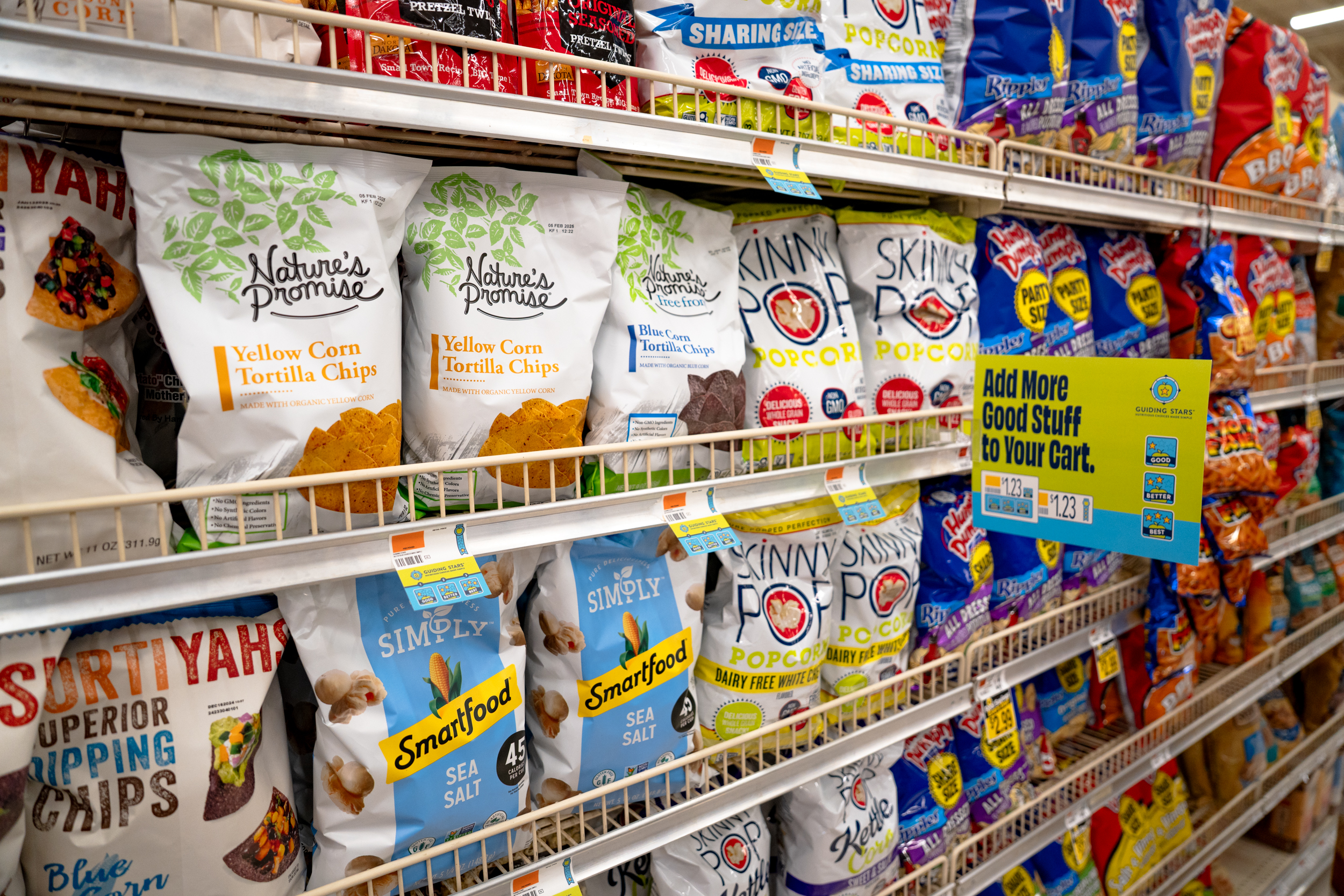
According to a recent survey of US adults, more than a third of respondents experience “aisle anxiety” when grocery shopping. And 39% feel “overwhelmed” by all the options. The survey also found that the average shopper spends four minutes deliberating over each item—and 32% take longer. It doesn’t need to be this way! Use the Guiding Stars nutrition navigation system to help you “see” what’s inside those food packages. By doing so, you’ll know which are the best choices for you and your family. Here’s how…
Look for the Guiding Stars
If you have time to study the labels and ingredient information for everything you plan to purchase, spend the time. Knowing how to read labels is a valuable skill. But for a faster shopping experience (without giving up your quest for healthy foods), it’s time to get starry-eyed. As you walk the aisles, you’ll find many products sporting the blue and green Guiding Stars apple along with 1, 2, or 3 Stars. The easy-to-spot icon shows up on shelf tags, signage, and even some store-brand product packages. The stars indicate good, better, and best nutrition (more on that below). To maximize the nutritional quality of your diet, simply focus your food and beverage choices on Star-earning items.
More Stars Means More Nutrition
Healthy eating begins with healthy food—which means selecting those foods while shopping. Aligning your food choices with your health goals is definitely a way to help achieve a healthy diet. But making all those smart decisions in the midst of a grocery shopping trip can be daunting. This is when choosing Star-earning foods can save you time and effort. If a food earns Guiding Stars, you can trust it’s already one of the better choices in its category. For example, foods earn Guiding Stars for:
- being lower in sodium
- having less added sugar
- being lower in saturated and trans fats
- containing more fiber
- containing more vitamins and minerals
- including live, active cultures
- being higher in omega-3 fatty acids
- containing more whole grains
- having fewer additives to limit
The bottom line? When you choose Star-earning foods, you’re automatically filling your cart with foods that are more nutritious than their non-Star-earning counterparts.
Let the Algorithms Do the Work
Wondering how we assign Stars to foods and beverages? Guiding Stars uses patented algorithms to evaluate the nutritional merits of thousands of different food items. At its most basic, an algorithm is a set of rules for organizing and analyzing data. Because different types of foods and beverages have inherent compositional differences, we utilize five different algorithms. For example, we wouldn’t try to evaluate apples using the same algorithm that we do for olive oil. This way, our evaluations are more relevant, appropriate, and fair.
Evaluating a food’s nutrition and ingredient data through the appropriate algorithm produces a score. It’s determined by weighing numerical credits (for beneficial nutrient characteristics) against debits (for ingredients to avoid or less-healthy characteristics). If that score is positive, the food will receive a Star value of one, two, or three Stars. If the score is negative, the food will not earn any Stars. If you see a product without a Guiding Stars rating, it either does not meet the nutritional qualifications to earn a Star, or it’s in a category of items that we don’t evaluate, such as:
- medical foods
- meal replacements
- supplements
- infant formula
- foods with less than 5 calories per serving (like spices)
- alcohol
Getting started using Guiding Stars is easy. Whether you’re looking to level-up your food choices, or follow an eating plan for specific health reasons, the Stars can help you navigate the aisles and select the best foods for you and your family. Next time you go shopping, follow the Guiding Stars to make informed grocery choices more quickly and confidently.